
Correct sizing and layout
A replacement is a chance to match gutter size and downspout placement to the actual roof area and valleys, so water is directed where it needs to go.
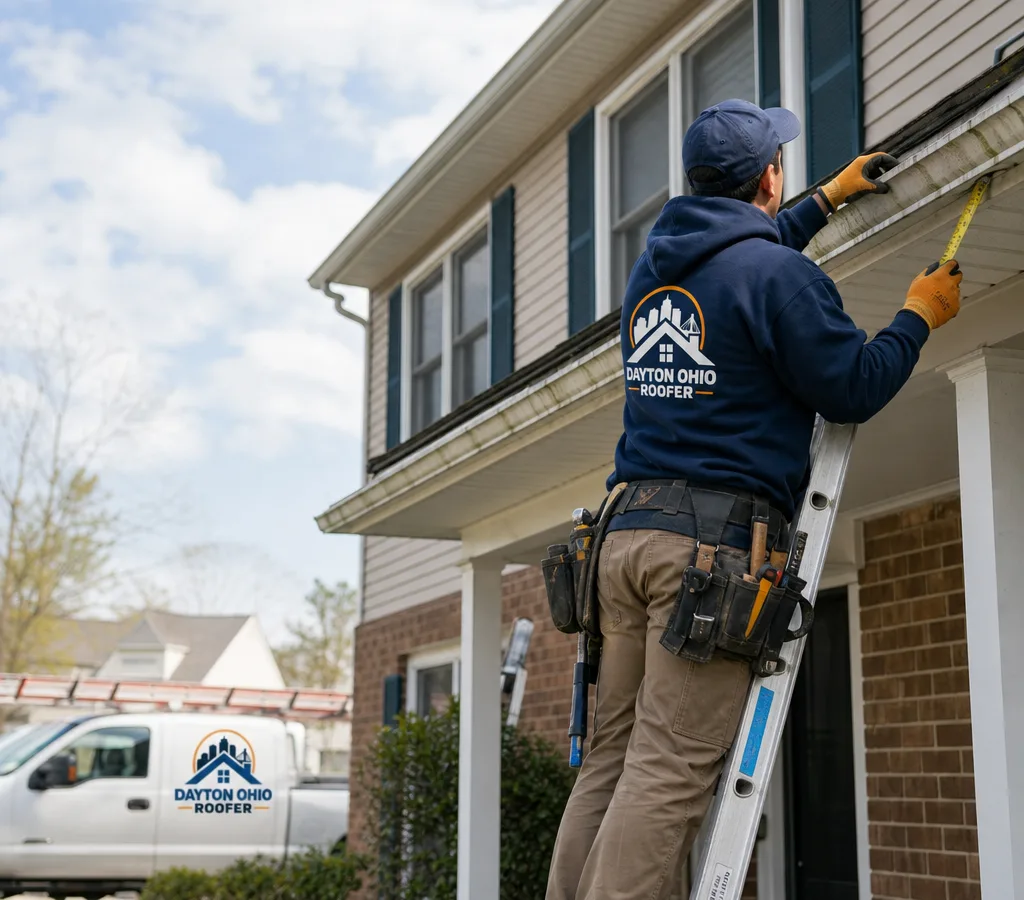
Describe what's failing once and get connected with a local contractor who replaces gutters, downspouts, and the related trim details for a clean, water-tight install.
Know what is failing before choosing the fix
If you're searching for gutter replacement Dayton Ohio, you're usually dealing with more than one small leak. Gutters are supposed to collect roof runoff, hold slope, and send water through downspouts far enough from the foundation that it can't soak the wall or wash out the landscaping. When the system can't do that reliably, replacement is often the straight path to getting drainage back under control.
Common reasons homeowners and property managers replace gutters in the Dayton area:
A contractor will usually start by confirming what's actually failing: the gutter body, attachment to the fascia, slope, downspout layout, or roof-edge detail. Mature-tree debris can mimic a bad gutter, while older homes may have hidden wood deterioration behind the system.
The useful first step: Describe the overflow, sagging, leaks, and discharge points once. We can connect you with a local contractor who handles gutter replacement in Dayton and nearby communities. You speak directly about options and scheduling, then decide whether to proceed.
If water appears to be getting behind the gutter, the roof edge may also need attention. A contractor can evaluate the edge metal and drainage path as part of the conversation.
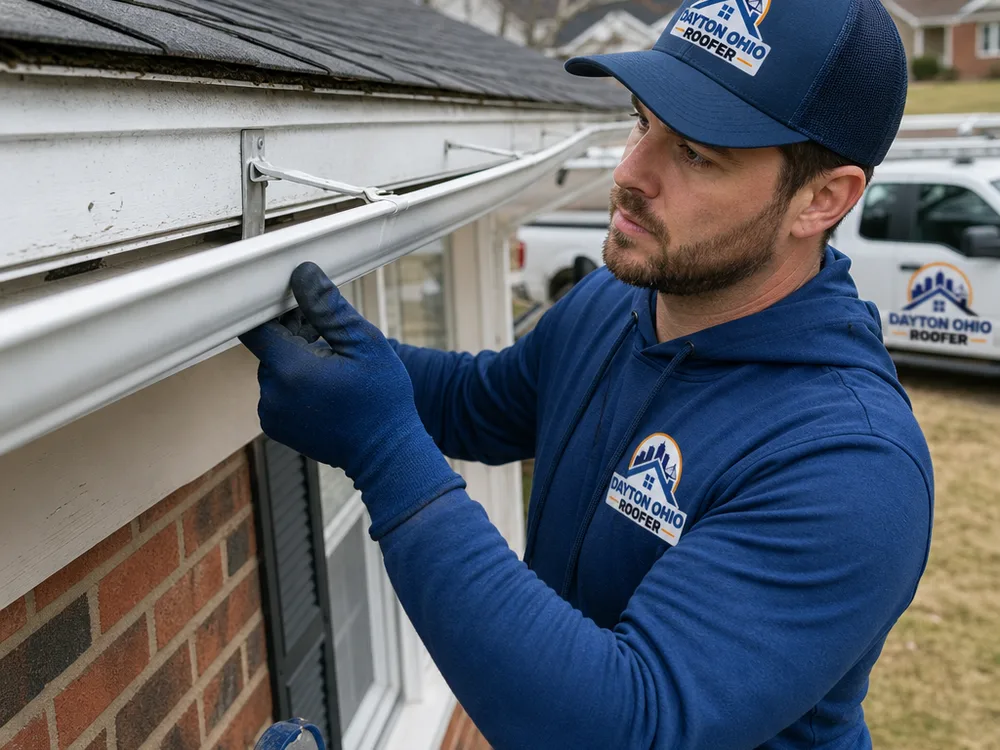
Plan the complete drainage path
A replacement is a chance to match gutter size and downspout placement to the actual roof area and valleys, so water is directed where it needs to go.
Contractors set consistent slope toward outlets. A gutter that holds water corrodes faster and overflows more often.
Many installs use formed-on-site seamless aluminum with sealed corners and end caps to reduce joint-related leaks.
Replacing gutters often includes adjusting how and where downspouts release water, including extensions or redirects that keep runoff away from the wall line.
If the fascia board is soft or split, the new system will not stay tight. Contractors check the wood and drip-edge area before hanging new gutters.
A full replacement typically includes taking down the old gutters and hauling away debris so the property is not left with metal scraps and fasteners.
From first conversation to final flow check
Describe where water is overflowing, any areas that sag, and whether the problem happens during heavy rain or even light rain. Mention basement seepage or washout spots near the building.
The contractor measures runs, notes corners and outlets, and checks fascia condition, drip-edge details, and areas where shingles may dump water behind the gutter.
Review options such as seamless aluminum, heavier-gauge systems, gutter guards if desired, and downspout routing that fits the property's grading and landscaping.
Old gutters and downspouts are removed, problem wood is identified, and the edge is prepared so new hangers and outlets can be set straight.
New sections are hung at the right pitch, corners and end caps are sealed, downspouts are secured, and flow is checked so water reaches the intended discharge point.
If you're tired of re-sealing joints and chasing overflow, describe the setup once and we'll connect you with a local contractor who can replace the gutters and downspouts the right way.
CALL NOW: (937) 800-4433Visible installation and material details
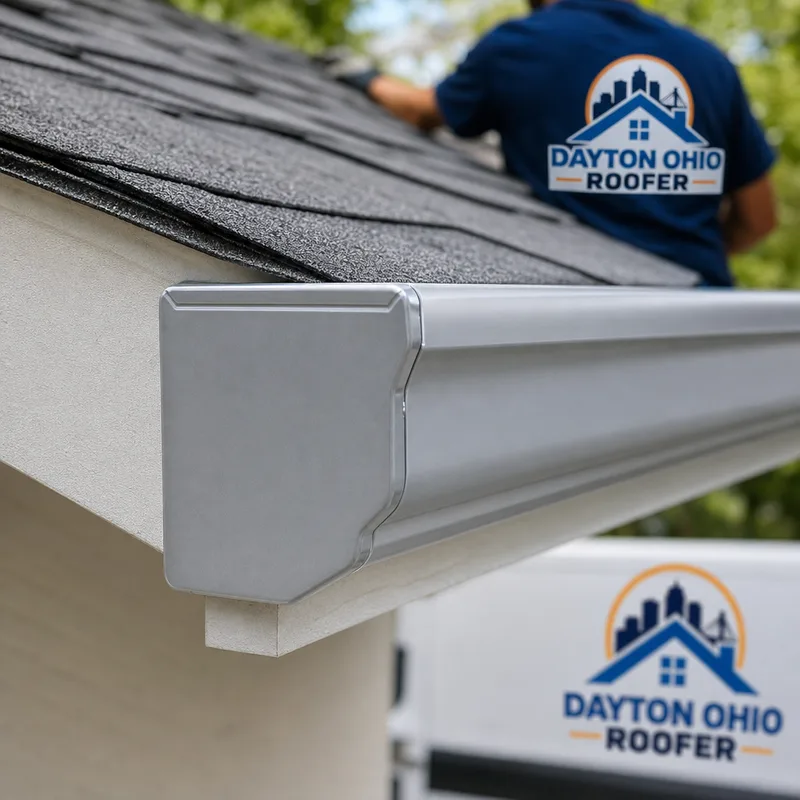
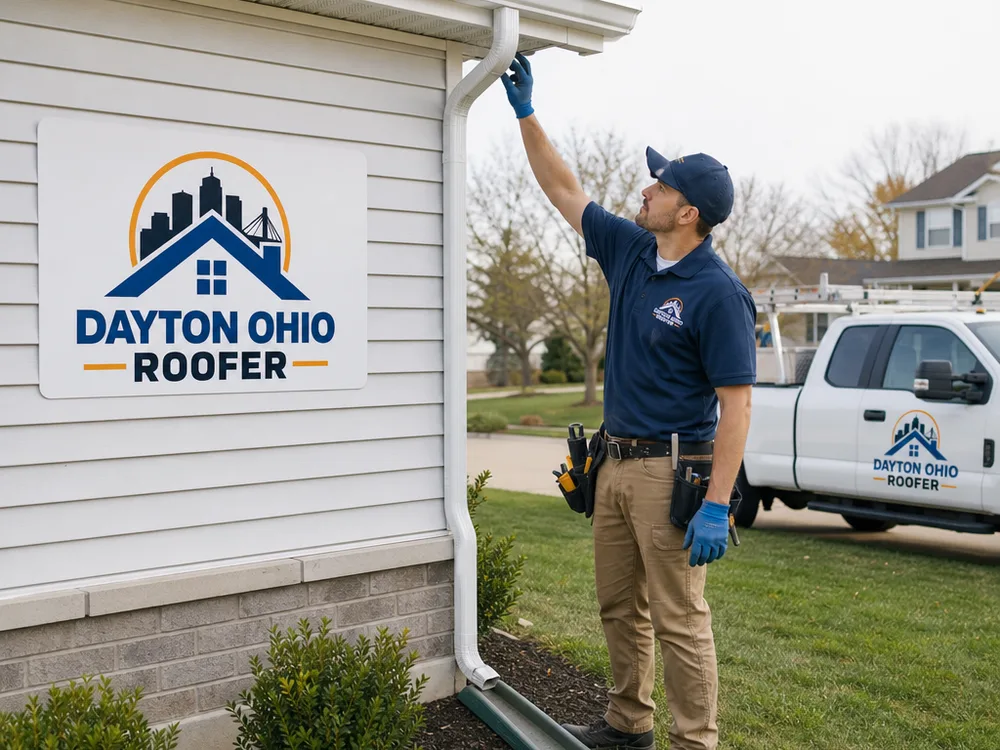
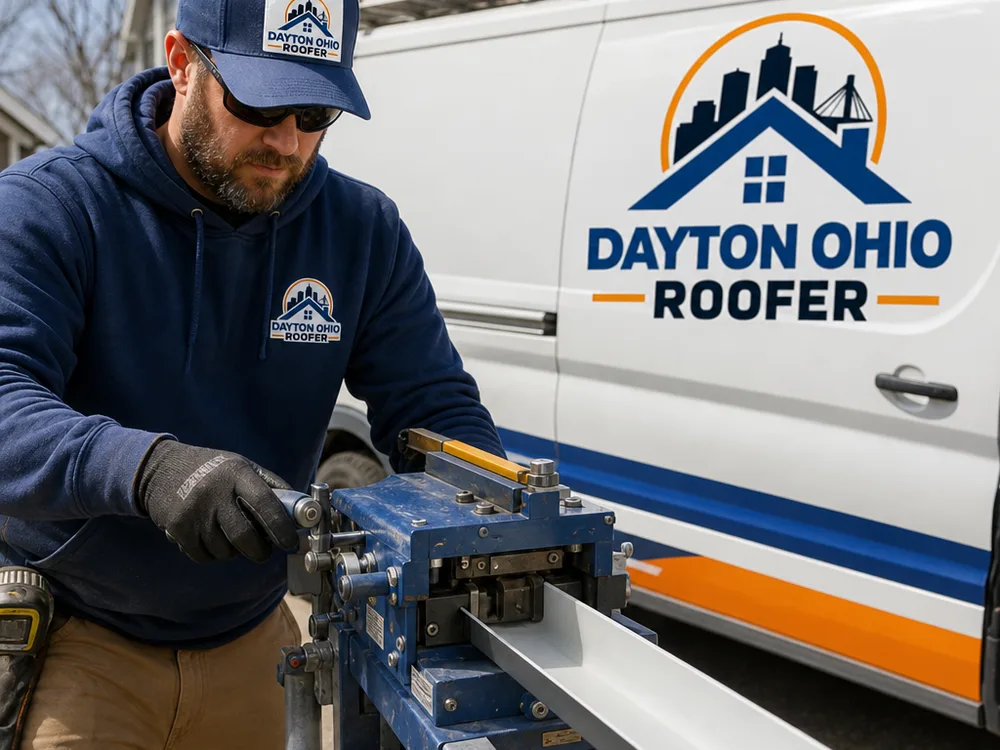
Replacement is often the better call when there are multiple leaking seams, recurring sagging, or sections pulling away from the fascia. A contractor can confirm whether the issue is a few failed joints or a system-wide problem like wrong pitch, undersized downspouts, or damaged fascia that will not hold new fasteners.
The most useful details are the building type, number of stories, where overflow or leaking appears, and whether downspouts discharge near the foundation. Note whether water spills over the front edge, which can indicate capacity or clogging, or runs behind the gutter, which can indicate a roof-edge issue.
Downspouts are commonly replaced or reconfigured because they control where the water ends up. The contractor can recommend whether to keep existing downspouts, change sizes, add one at a problem corner, or adjust discharge with extensions or redirects.
A useful evaluation includes fascia and soffit condition, the straightness of the board line, drip edge and shingle overhang, and where roof valleys concentrate runoff. Older Dayton properties may also have paint layers or concealed wood deterioration that need attention before the new gutter can sit flat.
Seamless gutters reduce the number of joints along straight runs and therefore reduce potential leak points. Seams still remain at corners and end caps, so corner work, sealing, and hanger spacing continue to matter.
Many standard replacements are completed in a single workday once materials and access are set, while larger buildings or complex rooflines can take longer. The contractor can outline the schedule after measuring runs, counting corners and downspouts, and reviewing any needed fascia work.
Replacement involves ladders, debris removal, and carrying long gutter runs, so access around the perimeter matters. Tell the contractor about delicate plantings, uneven ground, or tight side yards so ladder placement and staging can be planned.
You call and describe the gutter problems and building type once. We connect you with a local contractor who handles gutter replacement. You then speak directly with that contractor about options and next steps, and you decide whether to move forward.
Describe the gutter layout and problem areas once. We'll connect you with a local contractor who can take it from there.
Based in Dayton, Ohio and on the job within roughly 10 miles of the city center — including Kettering, Beavercreek, Riverside, Huber Heights, Trotwood, Centerville, Fairborn and Miamisburg.